
Gallehus horn
Gold horn, now lost · Southern Jutland, Denmark · c. 400 CE
Draft content, not yet reviewed.




Read it rune by rune
Shown left to right in reading order, in the standard rune shapes used on this site. On the object, the shapes, spacing, and direction can differ. Dashed runes are damaged or uncertain. Text: Rundata: DR 12 † (Gallehus horn); National Museum of Denmark: The Golden Horns
What it says
Ek Hlewagastiz Holtijaz horna tawido.
I, Hlewagastiz Holtijaz (of Holt, or Holti's son), made the horn.
Rundata: DR 12 † (Gallehus horn)
The object
- Object
- Gold horn (lost) Rundata: DR 12 † (Gallehus horn); National Museum of Denmark: The Golden Horns
- Found
- Gallehus, near Møgeltønder, Denmark Rundata: DR 12 † (Gallehus horn); National Museum of Denmark: The Golden Horns
- Date
- 375/400–460/470 CE Rundata: DR 12 † (Gallehus horn)
- Fate
- Stolen and melted down in 1802 National Museum of Denmark: The Golden Horns
Reading it
The inscription is a full sentence in which the maker names himself: "I, Hlewagastiz Holtijaz, made the horn." Holtijaz can be read as "of Holt" or "Holti's son."
A word divider follows each of hlewagastiz, holtijaz, horna, and tawido. There is none between ek and hlewagastiz.
What happened to it
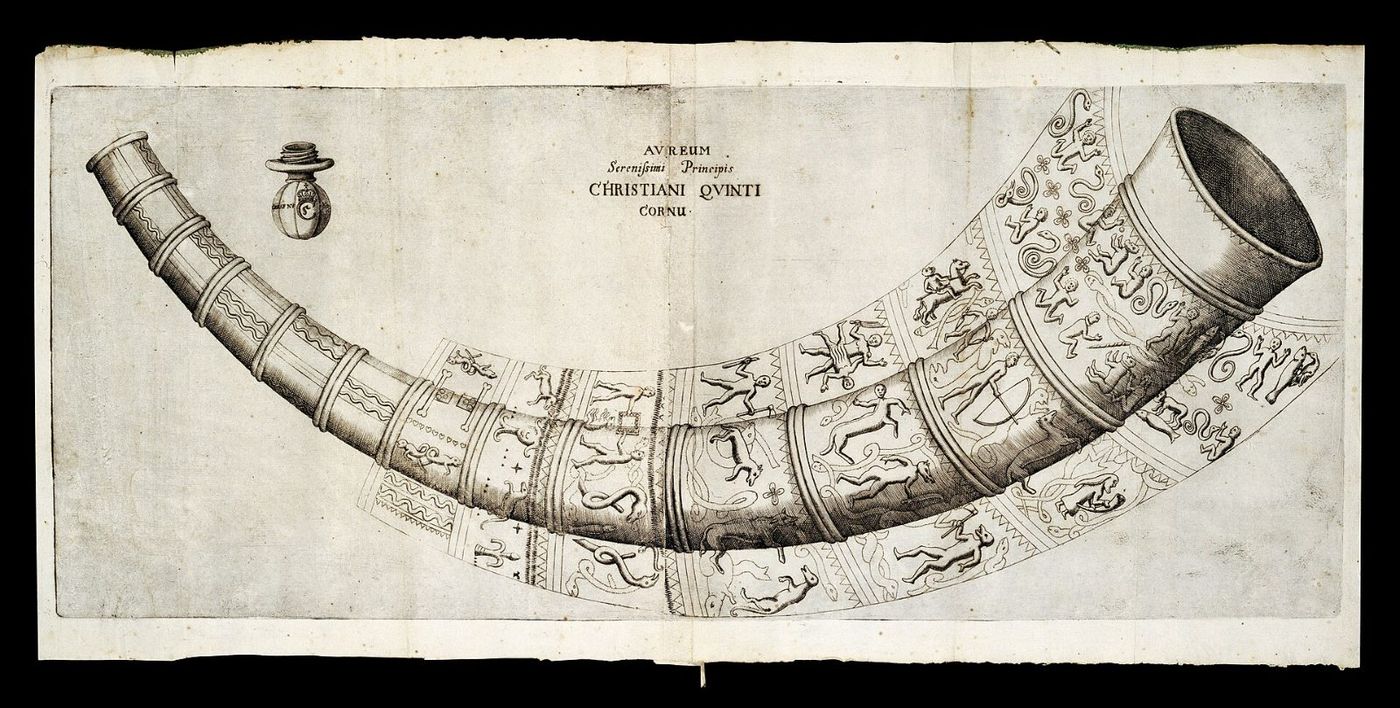
Two gold horns were found at Gallehus: the long horn in 1639, and the short horn in 1734, a few metres away.
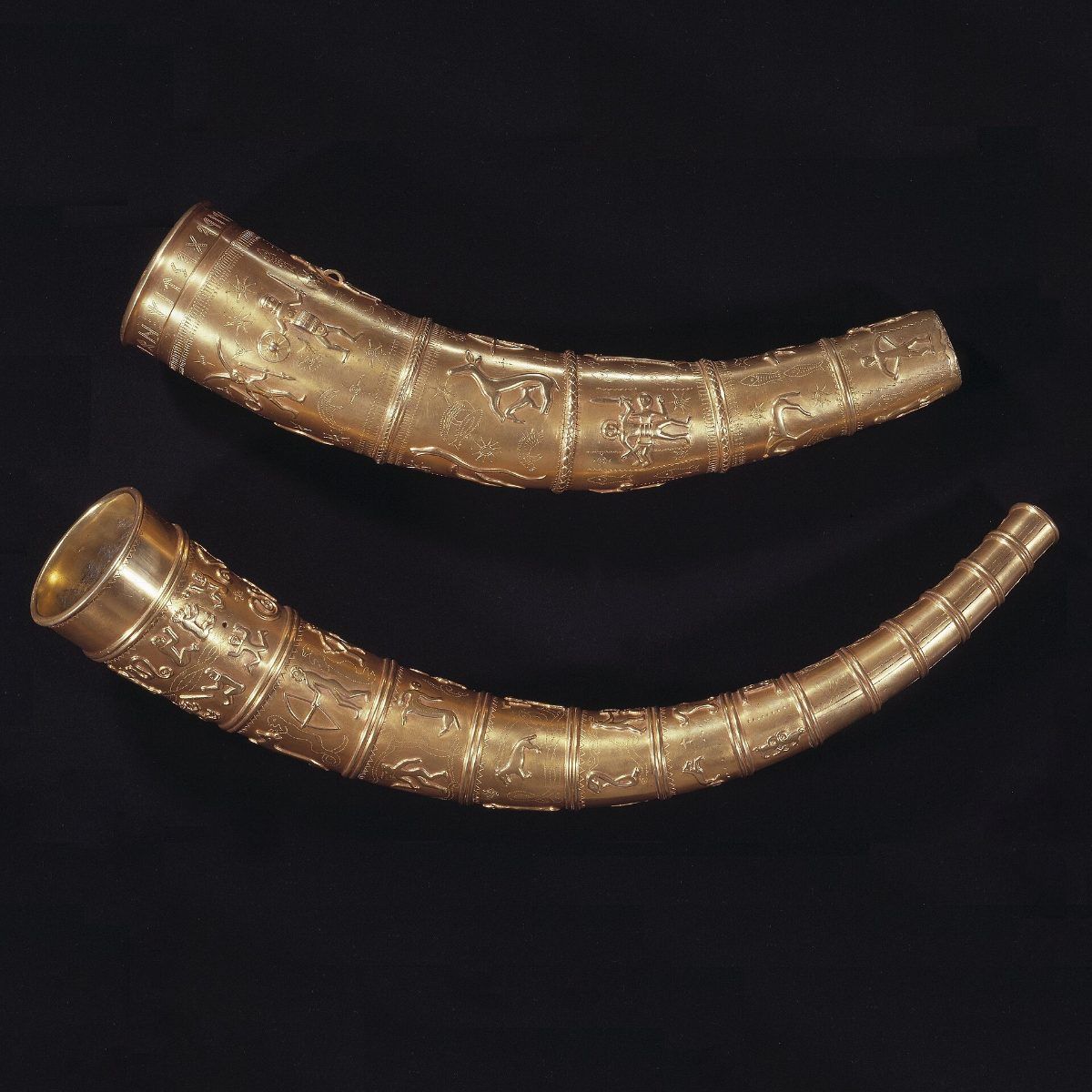
Both horns were stolen and melted down in 1802. What they looked like is known only from drawings made in the 17th and 18th centuries, so the inscription is read today from those drawings, not from the gold.
Copies made in 1859–60 are too large but probably have the right shape. A set made in the 1970s is the right size.